
Quick answer: what are lash extensions?
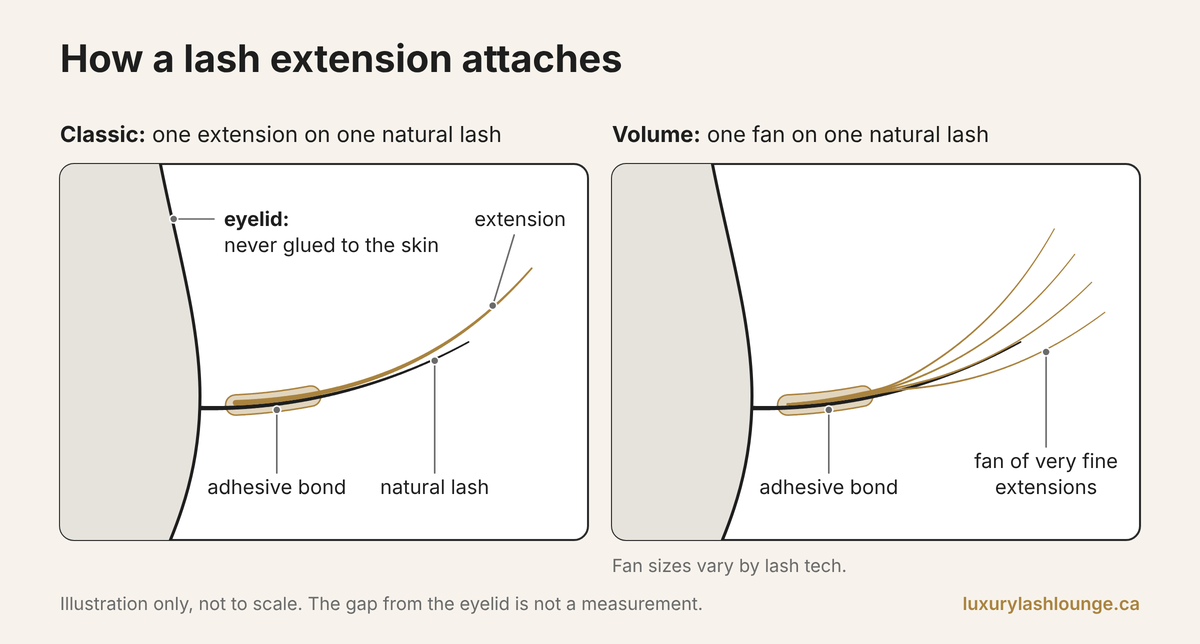
Lash extensions are semi-permanent fibres, usually synthetic, that a trained lash tech attaches to your natural lashes to make them look longer, fuller or curlier. Each extension, or fan of very fine extensions, is bonded to a single natural lash with lash adhesive (typically a cyanoacrylate glue) and is never glued to your skin.
The American Academy of Ophthalmology (AAO) says extensions typically last three to four weeks, falling off as your natural lashes shed, which is why a set needs refills. Our guide to how long lash extensions last explains the lash cycle.
What are eyelash extensions, exactly?
Eyelash extensions, usually shortened to lash extensions, are single artificial lashes attached to your own lashes for a cosmetic effect. EyeWiki, the eye encyclopedia published by the American Academy of Ophthalmology, defines them as "synthetic fibers (e.g. polyester) that are applied on the natural lashes for cosmetic reasons."
That is the simplest answer to "what are lash extensions?", and four details make it precise:
- They are semi-permanent. You don't take them off at night, as you usually would with strip lashes. The AAO describes the glue as "specially formulated, semi-permanent," and each extension stays on until the natural lash it sits on sheds.
- They go on one natural lash at a time. A 2024 paper in the Journal of Clinical Medicine describes the procedure as "the gluing of individual artificial, silk or mink fibers to each natural eyelash." A classic extension sits alone on its natural lash, while a volume set uses a fan of several finer extensions on one natural lash.
- A trained professional applies them. Health Canada tells you to "ensure that the person applying the eyelash extensions is a trained professional." Its Cosmetic Ingredient Hotlist says cyanoacrylate adhesives for eyelash extensions "must be sold for professional use only."
- They are never glued to your skin. The bond sits on the natural lash, a little away from the eyelid. Health Canada warns that the glue used for eyelash extensions "may bond your eyelids instantly."
At Luxury Lash Lounge, our private, appointment-only studio in Woodbridge, Vaughan, we apply hybrid, volume and mega volume sets. Everything we sell in our shop is used on our own clients, so the trays, glue and pads described below are the ones we use.
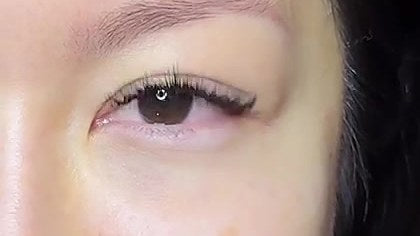
How do lash extensions work?
A lash tech separates one natural lash from its neighbours, dips the base of an extension in adhesive and lays it along that lash, a little away from the skin. The adhesive sets quickly, and the extension stays on until that natural lash sheds.
That is how eyelash extensions work in every style, from a single classic extension to a big mega volume fan. The four parts below explain each piece.
How are lash extensions applied?
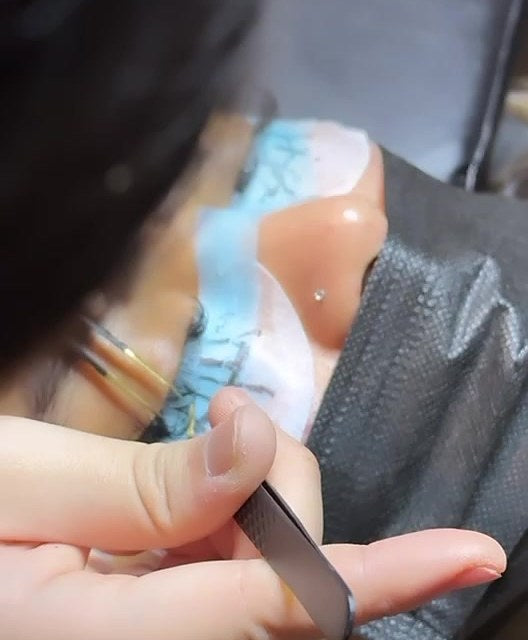
Lash techs call the first move isolation. With one tweezer, the lash tech separates a single natural lash from the lashes around it. With a second tweezer, they pick up an extension or a fan, dip only its base in a small drop of adhesive and attach it to the isolated lash.
Isolation keeps each extension on one natural lash, so neighbouring lashes are not glued together. The directions for our EXTREME BOND adhesive sum up the technique: "attach it to one isolated natural lash, and keep the adhesive off the skin." Lash techs also brush through the lashes as they work to check that nothing is stuck together.
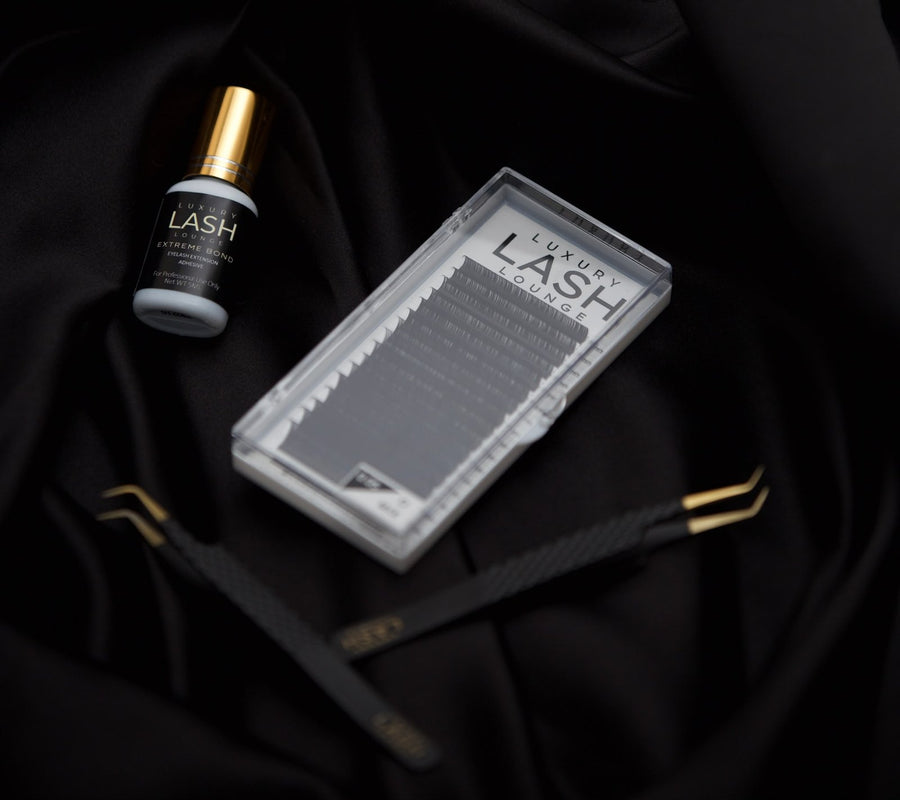
Our own tweezers come as an isolation tweezer and a volume pick-up and fanning tweezer. Each one is made of Japanese steel and hand tested for pick-up and fanning before it ships.
How the bond forms
Lash extension adhesive is typically a cyanoacrylate glue. Health Canada's Hotlist names "cyanoacrylate-based adhesives," including ethyl cyanoacrylate, and sets special rules for the ones made for eyelash extensions.
Cyanoacrylates cure by reacting with moisture. A 2018 chemistry review in Molecules explains that "rapid anionic polymerization on exposure to surface moisture is responsible for instant adhesion."
That is why humidity matters in a lash room: the same glue can set differently in a dry winter room and a humid summer one. Our EXTREME BOND, for example, dries in 0.5 to 1 second and works best at 50 to 70% humidity. Our lash extension glue is for trained lash professionals only, not for home use.
Why the glue never touches your skin
The bond belongs on the natural lash only. Health Canada requires adhesives for eyelash extensions to carry the cautions "For application by trained professionals only" and "Ensure the eye is protected and immobilized during application."
The label must also carry this warning, in capitals: "WARNING. BONDS SKIN INSTANTLY. AVOID CONTACT WITH EYES, MOUTH AND SKIN."
Those cautions explain two things you will notice at your appointment. Your lash tech keeps the adhesive on your natural lashes, a little away from the eyelid, and your eyes stay closed and still from start to finish.
Why they fall out
Extensions come off when the natural lash they are attached to sheds. In the AAO's words, they typically last three to four weeks, "falling off as your natural lashes shed."
Natural lashes shed a few each day, the 2024 paper notes, so a set thins out gradually rather than all at once. That is the reason refills exist, as you will see under "Upkeep and refills" below.
What are lash extensions made of?
Lash extensions are made of fine fibres, usually synthetic, held on with a cyanoacrylate adhesive. The AAO puts it simply: "There are three types of lash extensions: synthetic, silk and mink."
The fibres
EyeWiki's definition, quoted above, names polyester as an example of the synthetic fibres used. Our own extensions are Korean PBT fibre. PBT stands for polybutylene terephthalate, which the ESTHER research database describes as "a thermoplastic (semi-)crystalline polymer, and a type of polyester."
Our trays are hypoallergenic, vegan and cruelty-free, and the lashes are dark and bold but lightweight and soft. Each tray holds 16 rows on a foil backing, so the lashes come off the strip cleanly. If a vegan set matters to you, ask your lash tech what their fibre is made of.
Each fibre also has a curl, a thickness and a length. Curl names and shapes vary by manufacturer; ours come in C, CC, D and L. In Alessia's words, C curl gives a more natural look, and D curl is the most popular with lash techs, a universal curl that looks good on everyone.
Thickness and length are measured in mm. Our trays come in 0.15 mm for classic and 0.05 mm or 0.03 mm for fans, in lengths from 8 to 19 mm. Compare our single length volume trays and mixed length trays, or browse all our lash extension trays.
Our lash curl chart explains what each curl, thickness and length does.
What's in the glue
Every lash extension adhesive has its own formula, so it is worth asking what is in it. The AAO suggests exactly that: "Ask for the glue's ingredient list and check it for allergens."
Our EXTREME BOND lists ethyl cyanoacrylate, PMMA (polymethyl methacrylate), hydroquinone and carbon black. It comes in a 5 ml bottle and is low-fume and latex-free. The 2024 paper found a similar pattern: in the local studios its authors checked, all the glues contained cyanoacrylate and polymethyl methacrylate.
Types at a glance
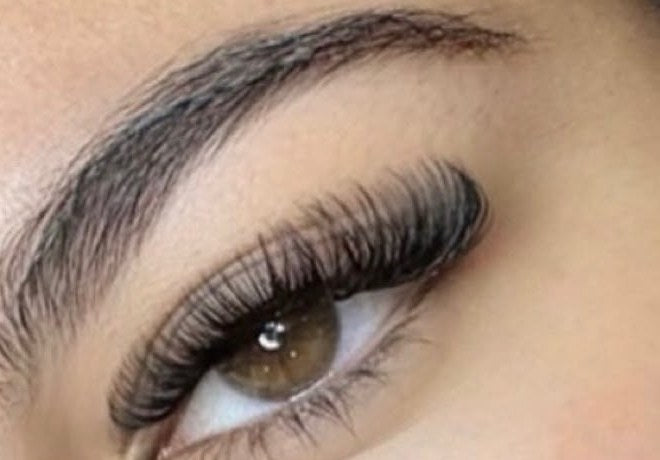
Sets are named by what goes on each natural lash. Classic means one extension, volume means a fan of very fine extensions, mega volume means a bigger fan of ultra-fine extensions, and hybrid mixes classic and volume.
| Type | What goes on each natural lash | The look | Our full set / refill |
|---|---|---|---|
| Classic | One extension (0.15 mm in our trays) | Length and definition, one for one with your own lashes | Not offered (hybrid is our closest option) |
| Hybrid | A mix: classic extensions on some lashes, volume fans on others | Fuller than your natural lashes, without the bold, dark look of volume | $120 / $65 |
| Volume | A fan of several very fine extensions (0.05 mm or 0.03 mm in our trays) | A denser, fluffier lash line | $135 / $70 |
| Mega volume | A bigger fan of ultra-fine extensions (0.03 mm in our trays) | A very dramatic, voluminous set | $150 / $80 |
Prices are in Canadian dollars (CAD), before HST.
We don't offer classic sets as a service, although Alessia is certified in classic and our Masterclass teaches it. If you were hoping for classic, hybrid is our closest option.
At our studio, Alessia does natural, open eye (doll eye), cat eye, fox eye, wispy, wet look and strip lash styles. Fan sizes, and styles such as cat eye, doll eye and wispy, are covered in our guide to the types of lash extensions and lash styles.
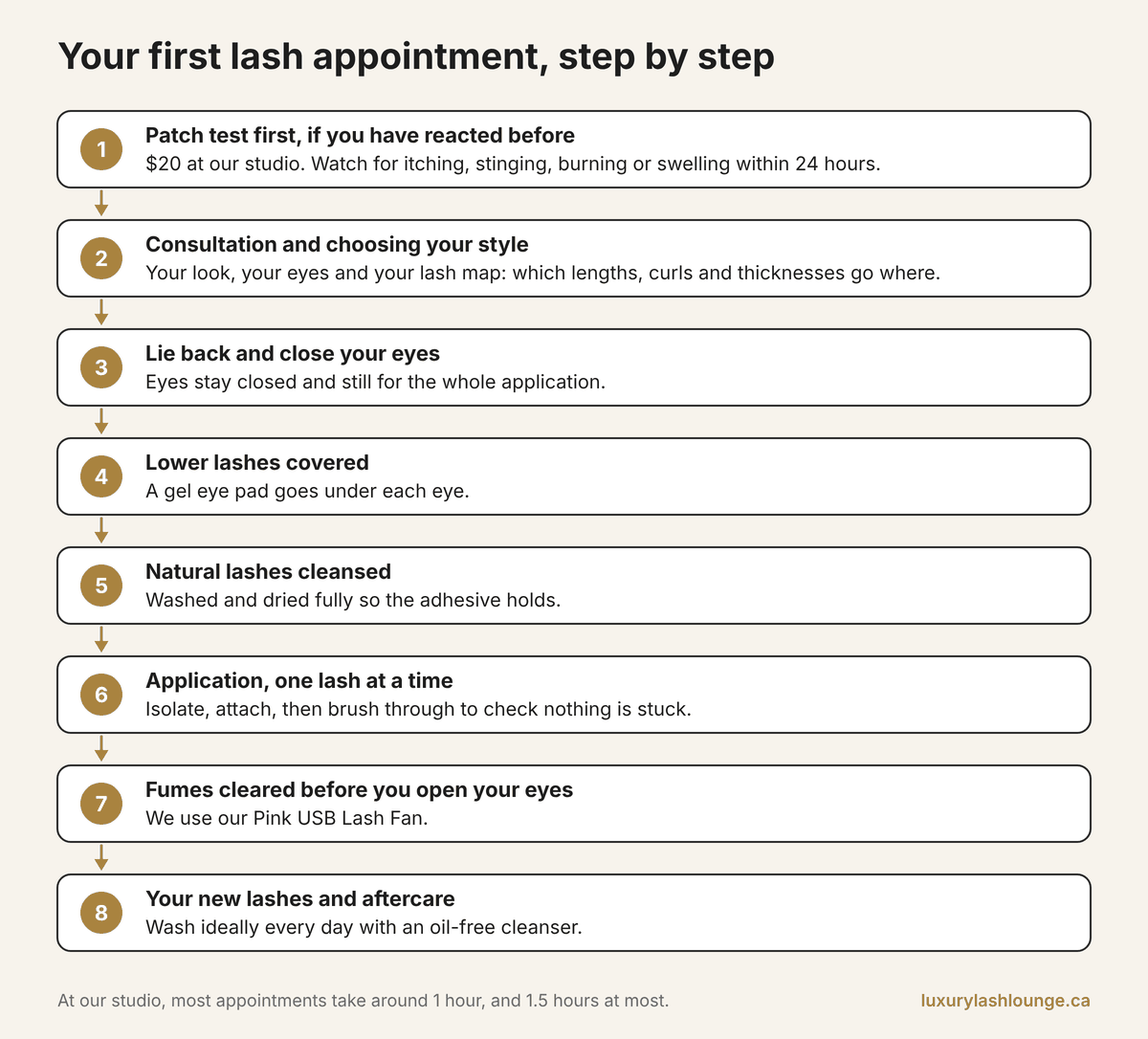
What happens at your first lash extension appointment, step by step
At your first appointment, you talk through the look you want and then lie back with your eyes closed. Your lash tech covers your lower lashes, cleanses your natural lashes and applies the extensions one by one.
At our studio, we clear the glue fumes with a fan before you open your eyes, then go over aftercare.
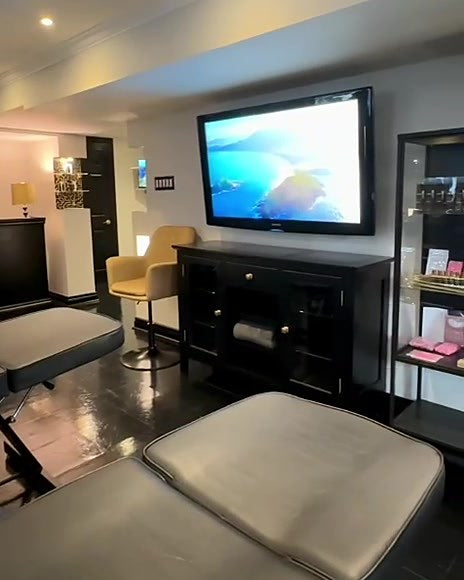
- Patch test first, if you have reacted before. If you've had a reaction or sensitivity to lash extensions in the past, book a patch test before your full set. Ours is $20: we place 5 to 10 short, natural extensions on each eye using our glue, plus the hydrogel eye pad we use in all our lash treatments. Itching, stinging, burning or swelling within 24 hours may mean a sensitivity or allergy, so let us know, don't remove the test lashes yourself, and see an eye doctor promptly.
- Consultation and choosing your style. You talk about the look you want, your lifestyle and any eye conditions or allergies. Your lash tech looks at your natural lashes and eye shape, then plans a lash map: which lengths, curls and thicknesses go where. Our lash map guide shows how maps are built.
- Lie back and close your eyes. You lie on a padded lash bed, and your eyes stay closed for the whole application. The AAO says your eyes "should remain closed for the duration of the application," and Health Canada says that during application "the eyes must be protected and immobilized."
- Lower lashes covered. A gel eye pad goes under each eye, close to the lash line but off the waterline, to cover and protect your lower lashes. Stray lower lashes may be taped down. Our gel eye pads are hypoallergenic, and they are the same pads we use in our own appointments.
- Natural lashes cleansed. Your natural lashes are washed and dried fully, which helps the adhesive hold. The foam in our Lash Cleanser Kit is made for this prep step as well as for home care.
- Application, one lash at a time. Following your lash map, your lash tech isolates a natural lash, attaches an extension or fan, and moves to the next, keeping the adhesive off your skin. They brush through with a lash spoolie to check that no lashes are stuck together. At our studio, most appointments take around 1 hour, and 1.5 hours at most; our guide to how long lash extensions last also covers appointment times.
- Fumes cleared before you open your eyes. At the end of your appointment, we use our Pink USB Lash Fan to clear the glue fumes before you open your eyes, so you are comfortable when you do. EyeWiki notes that extensions may cause keratoconjunctivitis (an itchy, irritated, red eye surface) "because of the spread of chemicals onto the ocular surface."
- Your new lashes and aftercare. You open your eyes, see your set and go over aftercare with your lash tech. Alessia's advice is to wash your lashes, ideally every day, with an oil-free cleanser, and we recommend going home with a clean spoolie.
Do lash extensions hurt?
Lash extensions should not hurt. The extensions are bonded to your natural lashes rather than your skin, and your eyes stay closed throughout, so most of the appointment is simply lying still.
Stinging, burning, itching or pain are not a normal part of the process. If you feel any of them, tell your lash tech straight away.
Why something might sting or itch
Eye-health sources point to a few possible causes. EyeWiki notes that extensions may cause keratoconjunctivitis "because of the spread of chemicals onto the ocular surface," which usually shows up as itching, irritation and redness. It adds that eyelid-fixing tapes can irritate the eye enough to cause conjunctival erosion, with redness, pain, tearing and a foreign body sensation.
An allergic reaction is another possibility. The AAO says "an allergic reaction can trigger pain, itching, redness and swelling," and EyeWiki notes that allergic eyelid symptoms "may not occur until hours or days after the eyelash extensions are applied."
What to do if something feels wrong
- During your appointment: tell your lash tech right away so they can stop and check.
- After your appointment: with pain, redness, itching, swelling, discharge, light sensitivity or blurred vision, don't remove the extensions yourself or try to treat the reaction at home. See an eye doctor (an optometrist or ophthalmologist) promptly; the AAO's advice is to "go see an ophthalmologist immediately."
- If a set feels uncomfortable later, for example when you blink, go back to your lash tech to have it checked. See an eye doctor if you have any of the symptoms above.
Our lash glue allergy guide explains how an allergy differs from irritation and what to do next.

How to prepare for lash extensions
Come with clean, makeup-free lashes, tell your lash tech about any eye conditions, allergies or past reactions, and plan to lie still with your eyes closed. A few questions before you book help too.
Before you book
- Choose a trained lash tech, and ask questions. The AAO suggests asking: "What training, certification, and experience does the aesthetician have in lash extensions?" It also suggests asking for the glue's ingredient list and checking that "the expiration date has not passed." Finally, it suggests requesting "a spot test on the inside of your wrist before the glue is applied to your eyes."
- Book a patch test if you have reacted before. Our $20 patch test is described in step 1 above. It is different from the AAO's wrist spot test: ours places 5 to 10 short extensions on each eye with our glue.
- Book a removal if you are wearing someone else's set. If you book a full set with us while wearing another technician's lashes, you must book a removal ($20) with it. We don't refill another lash technician's work.
On the day
- Come with clean lashes and no eye makeup. Lash techs commonly ask you to skip mascara and eyeliner and to keep oily creams and makeup removers off your lashes. That way, your lashes can be cleansed and dried for the adhesive.
- Tell your lash tech about your eyes. Mention any eye condition, allergy, recent eye surgery or past reaction to lash extensions, even if it seems minor.
- Ask about contact lenses. The 2024 paper notes that most of the sources its authors found advise removing contact lenses before the procedure. It also notes that no published study had yet examined extensions and contact lens discomfort. Mention your lenses when you book, bring your glasses and lens case, and ask your lash tech or optometrist if you are unsure.
- Plan to lie still. Wear something comfortable and use the washroom before you start, because your eyes stay closed until the end.
- Arrive on time. We are a private, appointment-only studio, and we need at least 24 hours' notice to cancel; see our booking policies. To book, text or call 647-533-7202, send a DM to @luxurylashlounge on Instagram, email luxurylashloungevaughan@gmail.com or use our contact page.
Who should not get lash extensions?
EyeWiki says people with an existing eye disease or a history of allergy should avoid lash extensions. If you have an eye infection, inflamed skin around your eyes or recent eye surgery, wait and ask your eye doctor first.
| If you have... | What reliable sources say | What to do |
|---|---|---|
| An existing eye disease | EyeWiki: "Clients with existing eye disease or allergy history should avoid eyelash extensions and may consider mascara as a safer alternative if used properly." | Talk to your eye doctor before booking |
| A history of allergy | The same EyeWiki advice applies. The AAO adds that an allergic reaction can trigger pain, itching, redness and swelling. | Ask your doctor first; if you have reacted to lash extensions before, book a patch test |
| Dry eye | In the 2024 paper's small study of 31 extension wearers with dry eye complaints, removing the extensions improved both their symptoms and the measured signs of dry eye. The study had no control group. | Ask your optometrist or ophthalmologist before booking |
| An eye infection or inflamed skin around the eye | The FDA, which treats eyelash extensions and their adhesives as cosmetics, says: "Avoid using eye cosmetics if you have an eye infection or the skin around the eye is inflamed." | Wait until it has cleared |
| Recent eye surgery | The AAO says not to wear makeup around the eye after recent eye surgery "until your ophthalmologist tells you it is safe to do so." | Ask your eye doctor before booking |
If none of these apply but something about your eyes worries you, ask your family doctor, optometrist or pharmacist before your appointment. Either way, tell your lash tech about anything that affects your eyes.
Upkeep and refills
Because each extension falls off with its natural lash, a set needs regular refills to stay full. At our studio, a visit counts as a refill when at least 40% of your extensions remain; anything less is charged as a full set.
Refills are $65 for hybrid, $70 for volume and $80 for mega volume, and a refill usually takes less time than a full set. Our guide to how long lash extensions last covers lash cycles, refill timing and retention.
What a set costs
At our studio, a full set is $120 for hybrid, $135 for volume and $150 for mega volume, and removals and patch tests are $20 each. Our lash extension services page has the full price list. For typical prices across the province, refill costs and whether extensions are worth it, see our guide to how much lash extensions cost in Ontario.
Looking after them
Wash your lashes, ideally every day, with an oil-free cleanser, and brush them into place with a clean spoolie once they are dry. Don't rub, tug or pull them: the AAO warns this "can fracture your natural lashes, and even cause permanent damage to the eyelash follicle."
Our lash extension aftercare guide covers washing, water, sleeping and the first days after your appointment. For makeup, eyeliner and lash curlers, read our post on whether you can put mascara on lash extensions.
Taking them off
Professional removal is the safest way to take lash extensions off, and the cream remover we use is for professional use only, not for home use. At our studio, a removal is $20, and outside removals are welcome.
With pain, redness, itching, swelling, discharge, light sensitivity or blurred vision, don't remove them yourself: see an eye doctor promptly. Our guide on how to remove lash extensions at home safely explains the gentlest approach and what never to do.
Lash extensions vs strip lashes, clusters and mascara
Lash extensions are the only option here that is bonded to individual natural lashes and worn for weeks, with refills. Strip lashes and clusters are usually temporary add-ons, mascara is daily makeup, and a lash lift curls your own lashes without adding any.
Part of answering "what are lash extensions?" is knowing what they are not, so here is how they compare.
| Option | What it is | How it's applied | How long it lasts | Good to know |
|---|---|---|---|---|
| Lash extensions | Single fibres or fans, each bonded to one natural lash | By a trained lash tech with a professional cyanoacrylate adhesive, eyes closed | Typically three to four weeks, falling off as natural lashes shed (AAO); refills keep a set full | In Canada, cyanoacrylate lash extension adhesives must be sold for professional use only |
| Strip lashes | A band of lashes worn along the lash line | Glued along the lash line with a strip lash adhesive, usually by the wearer | Usually taken off the same day | The AAO notes that glued and magnetic false lashes can irritate the skin around the eyes |
| Clusters | Small groups of lashes, usually pre-made | Commonly glued on in sections, often at home | Varies by product; follow its directions | Never use professional lash extension glue for clusters |
| Lash lift | A treatment that curls your own lashes; nothing is added | Lashes are combed onto a silicone shield and held with adhesive while a chemical lotion is applied (AAO) | About six to eight weeks (AAO) | Often combined with a tint; not offered at our studio |
| Mascara | Pigment brushed onto your lashes | By you, each day | Until you remove it; the AAO says to remove all eye makeup at night | EyeWiki says people with eye disease or allergies may consider it a safer alternative, if used properly |
Lash extensions vs strip lashes. Strip lashes sit on a band glued along your lash line, while extensions are bonded to individual natural lashes and come off as those lashes shed. The FDA notes that false eyelashes and eyelash extensions "require adhesives to hold them in place" and advises: "Check the ingredients before using these adhesives." Our EXTREME BOND is made for eyelash extensions only and should never be used to apply strip lashes.
Lash extensions vs clusters. Clusters are small bunches of lashes, usually pre-made and commonly sold for at-home use. Because cyanoacrylate lash extension adhesives must be sold for professional use only in Canada, never use professional glue for clusters or any other DIY application.
Lash extensions vs mascara. Mascara goes on and comes off the same day. The AAO says to "remove all eye makeup at night before sleeping, especially mascara that can stick to the lashes." It also says to "throw away eye makeup after three months and get new products."
A lash lift instead? A lift curls your own lashes, while extensions add length and fullness. In a lift, the AAO explains, the lashes are combed onto a silicone shield and held there with adhesive "while a chemical lotion is applied to break down the protein in each eyelash."
We specialize in extensions and don't offer lash lifts or tints. Our post on lash lift vs lash extensions compares the two side by side.
Safety in brief
According to the AAO, ophthalmologists say eyelash extensions "can be safe, as long as consumers take precautions to protect themselves." It also lists real risks: trauma to or infection of the eyelid or cornea, an allergic reaction to the glue, and temporary or permanent loss of eyelashes.
A 2019 review of eyelash extensions, eyelid tattooing and eyelash dyeing notes that "millions of these procedures are performed annually without any adverse effects," while "reports of complications continue to increase in the literature." To understand what causes damage and how to protect your natural lashes, read do lash extensions ruin your lashes?
Frequently asked questions
What are eyelash extensions made of?
Most are fine synthetic fibres. EyeWiki gives polyester as an example, and the American Academy of Ophthalmology lists three types: synthetic, silk and mink.
Ours are Korean PBT fibre, a type of polyester, on trays that are hypoallergenic, vegan and cruelty-free. They are attached with a cyanoacrylate adhesive; our EXTREME BOND lists ethyl cyanoacrylate, PMMA, hydroquinone and carbon black.
Is getting eyelash extensions painful?
It shouldn't be. The extensions are bonded to your natural lashes, not your skin, and your eyes stay closed throughout, so most of the appointment is lying still.
Stinging, burning, itching or pain is not normal, so tell your lash tech straight away. Afterwards, with pain, redness, swelling or vision changes, don't remove them yourself; see an eye doctor promptly.
Are lash extensions glued to your skin?
No. Each extension is bonded to a single natural lash, a little away from the eyelid, and the adhesive should never touch your skin.
Health Canada requires lash extension adhesives to carry the warning "BONDS SKIN INSTANTLY." That is why your eyes stay closed and still for the whole application, and why only trained professionals should apply them.
Can I put lash extensions on myself at home?
No. Health Canada's Cosmetic Ingredient Hotlist says cyanoacrylate adhesives for eyelash extensions "must be sold for professional use only." The eye must also be protected and kept still during application, which you cannot do on yourself.
If you would like to learn properly, our guide on how to become a lash tech in Ontario explains training.
What's the difference between lash extensions and strip lashes?
Strip lashes are a band of lashes glued along your lash line and usually taken off the same day; the AAO notes that glued and magnetic false lashes can irritate the skin around the eyes. Lash extensions are single fibres bonded to individual natural lashes by a trained lash tech. They stay on for weeks, falling off as your natural lashes shed, and need refills to stay full.
What should I avoid before my appointment?
Skip eye makeup, and keep oily creams and makeup removers off your lashes so they can be cleansed and dried properly. Don't book while you have an eye infection or inflamed skin around your eyes. Tell your lash tech about any eye condition, allergy, recent eye surgery or past reaction, and if you wear contact lenses, bring your glasses and lens case.
What are the downsides of eyelash extensions?
They need refills, daily cleansing and gentle handling, and they carry real risks. The AAO lists eyelid or corneal trauma or infection, allergic reactions to the glue, and temporary or permanent lash loss, though it says they can be safe as long as you take precautions to protect yourself. Our post on whether lash extensions ruin your lashes explains what causes damage.
Can you get lash extensions wet or shower with them?
Yes, with care: washing your lashes, ideally every day, with an oil-free cleanser is part of normal aftercare. Your lash tech will tell you how long to keep them dry after your appointment, and our lash extension aftercare guide covers showers, swimming, steam and sleeping step by step.
Are lash extensions worth it?
It depends on your budget, your routine and your eyes. A set needs refills every few weeks, daily cleansing and gentle handling, and EyeWiki advises people with an existing eye disease or a history of allergy to avoid extensions. Our guide to how much lash extensions cost in Ontario weighs prices and refill costs against the benefits.
Do you offer classic lash extensions?
Not as a service. Our studio offers hybrid, volume and mega volume sets, and if you were hoping for classic, hybrid is our closest option.
Alessia is certified as a Classic Lash Artist, and classic theory is part of our Eyelash Extension Masterclass for new lash techs. Your consultation is the place to talk through which style suits your natural lashes.
About the author
Alessia Simonetta is the owner, master lash artist and certified lash trainer at Luxury Lash Lounge in Woodbridge (Vaughan), Ontario. She has been lashing since 2018 and holds five certifications: Classic Lash Artist, Hybrid Lash Artist, Volume Lash Artist, Mega Volume Artist and Certified Lash Trainer.
She has worked with thousands of lash clients and trained hundreds of students. Book a set through our lash extension services, or learn from her in our 1-on-1 lash training.
Sources
- American Academy of Ophthalmology, "Eyelash Extension Facts and Safety" (Reena Mukamal; reviewed by Rebecca J. Taylor, MD; Feb. 23, 2018): https://www.aao.org/eye-health/tips-prevention/eyelash-extension-facts-safety
- EyeWiki, American Academy of Ophthalmology, "Eyelash Extensions" (last edited July 21, 2026): https://eyewiki.aao.org/Eyelash_Extensions
- Health Canada, "Eye cosmetics": https://www.canada.ca/en/health-canada/services/cosmetics/eye-cosmetics.html
- Health Canada, "Cosmetic Ingredient Hotlist" (entry: cyanoacrylate-based adhesives; date modified 2025-08-13): https://www.canada.ca/en/health-canada/services/consumer-product-safety/cosmetics/cosmetic-ingredient-hotlist-prohibited-restricted-ingredients/hotlist.html
- Duffy C, Zetterlund PB, Aldabbagh F. "Radical Polymerization of Alkyl 2-Cyanoacrylates." Molecules. 2018;23(2):465. doi:10.3390/molecules23020465: https://pmc.ncbi.nlm.nih.gov/articles/PMC6017548/
- Grupcheva CN, Grupchev DI, Usheva N, Grupcheva LO. "Beauty versus Health—How Eyelash Extensions May Affect Dry Eye Disease?" Journal of Clinical Medicine. 2024;13(11):3101. doi:10.3390/jcm13113101: https://www.mdpi.com/2077-0383/13/11/3101
- ESTHER database (bioweb.supagro.inrae.fr), "Polybutylene terephthalate": https://bioweb.supagro.inrae.fr/ESTHER/substrate/Polybutylene-terephthalate
- US Food and Drug Administration, "Eye Cosmetic Safety" (content current as of 06/28/2022): https://www.fda.gov/cosmetics/cosmetic-products/eye-cosmetic-safety
- American Academy of Ophthalmology, "How To Use Cosmetics Safely Around Your Eyes" (Dan Gudgel; reviewed by Rebecca J. Taylor, MD): https://www.aao.org/eye-health/glasses-contacts/eye-makeup
- American Academy of Ophthalmology, "Know the Risks of Eyebrow and Eyelash Enhancement" (Celia Vimont; reviewed by Rebecca J. Taylor, MD; Dec. 11, 2019): https://www.aao.org/eye-health/news/eyebrow-eyelash-coloring-could-harm-your-vision
- Masud M, Moshirfar M, Shah TJ, Gomez AT, Avila MR, Ronquillo YC. "Eyelid Cosmetic Enhancements and Their Associated Ocular Adverse Effects." Medical Hypothesis, Discovery & Innovation Ophthalmology Journal. 2019;8(2):96-103. PMID 31263720: https://pubmed.ncbi.nlm.nih.gov/31263720/